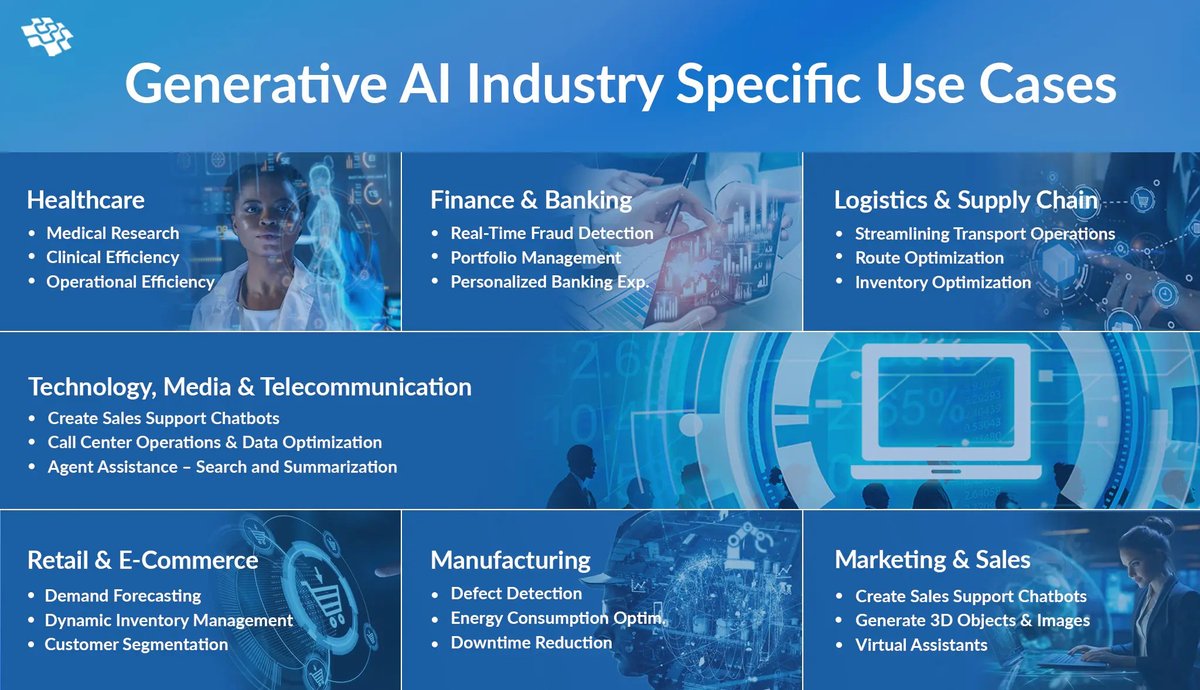
In 2025, artificial intelligence isn't just a futuristic concept; it's the bedrock of how industries operate, innovate, and connect with their customers. From refining complex decisions to hyper-personalizing experiences, AI’s key use cases and applications are actively reshaping virtually every sector, driving unprecedented levels of efficiency, insight, and competitive advantage. The global AI market is on a trajectory to reach an astounding $407 billion by 2027, propelled by breakthroughs in generative AI, autonomous agents, and accessible cloud-native platforms. This isn't just about automation; it's about augmentation—empowering businesses and people to achieve more than ever before.
At a Glance: AI's Transformative Power
- AI isn't science fiction anymore: It's an indispensable part of modern business, improving decision-making, efficiency, and customer experience across the board.
- Core technologies are foundational: Machine Learning, Deep Learning, Natural Language Processing, and Generative AI are powering diverse applications.
- Industry-wide revolution: Healthcare, retail, finance, manufacturing, and many other sectors are seeing dramatic improvements in operations and innovation.
- Tangible benefits: Expect reduced costs, increased revenue, better customer satisfaction, and optimized processes.
- Beyond the cloud: AI at the edge brings intelligence closer to the action, enhancing speed and privacy.
- Strategic adoption is key: Success hinges on identifying the right use cases, building responsible AI frameworks, and fostering human-AI collaboration.
The Engines Driving This Transformation: Core AI Capabilities
Before diving into specific applications, it's helpful to understand the underlying capabilities that make AI so versatile. Think of these as the fundamental tools in AI's toolkit, each unlocking distinct possibilities:
- Machine Learning (ML): This is the foundation, allowing AI systems to learn from vast amounts of historical data without explicit programming. By identifying patterns, ML can predict outcomes, classify data, or recommend actions. Whether it's supervised learning for fraud detection or unsupervised learning for customer segmentation, ML helps systems evolve and improve over time.
- Deep Learning: A sophisticated subset of ML, deep learning utilizes neural networks inspired by the human brain. It excels at processing complex, unstructured data like images, video, and natural language, powering advanced capabilities such as computer vision and speech recognition.
- Natural Language Processing (NLP): This capability enables AI to understand, interpret, and generate human language. From conversational chatbots that interact with customers to sentiment analysis tools that gauge public opinion, NLP makes human-computer communication seamless and intelligent.
- Automation: AI agents and software are adept at handling repetitive, rule-based tasks with incredible speed and accuracy. This translates to significant reductions in operational costs (60-80% for routine transactions), minimized human error (40-60% decrease), and the ability to scale operations effortlessly.
- Prediction: Predictive AI analyzes historical and real-time data to forecast future outcomes. This could range from predicting customer churn and market trends to anticipating equipment failures, allowing businesses to act proactively rather than reactively.
- Generation: Perhaps the most talked-about recent advancement, generative AI creates novel content—be it text, images, code, audio, or video. It augments human creativity, accelerates content production, and unlocks new forms of personalized interaction.
These core capabilities, often combined, form the backbone of the incredible AI applications we see transforming industries today.
AI's Impact Across the Industrial Landscape: A Deep Dive into Key Use Cases
Let's explore how AI is being deployed across various sectors, solving real-world problems and creating new opportunities.
Healthcare: Revolutionizing Patient Care and Discovery
AI is a game-changer in healthcare, moving beyond administrative tasks to directly impact diagnostics, treatment, and research. It’s helping medical professionals provide more precise, personalized, and efficient care.
- Early Disease Detection & Diagnostics: AI analyzes medical images (X-rays, MRIs, CT scans) and patient data with unparalleled speed and accuracy. Systems like IBM Watson and Google’s DeepMind can detect subtle indicators of diabetic retinopathy and breast cancer earlier than human analysis alone, reducing diagnostic errors by up to 30%. AI also excels at analyzing tissue samples for cancerous cells and predicting tumor behavior.
- Personalized Treatment Plans: By crunching a patient's genetic profile, medical history, and real-time health data, AI can recommend highly individualized treatment protocols, leading to shorter treatment cycles and improved outcomes.
- Continuous Patient Monitoring: Wearable devices and smart sensors, enhanced by AI, can continuously monitor vital signs, predict adverse events, and alert healthcare providers, particularly for at-risk patients or those in remote locations.
- Drug Discovery & Development: AI significantly accelerates the drug discovery process by identifying potential drug candidates, predicting their efficacy and toxicity, and optimizing clinical trial design. This drastically cuts down the time and cost associated with bringing new medications to market.
- Robotic Surgeries & Virtual Assistants: AI-powered surgical robots enhance precision and minimize invasiveness. Virtual health agents offer 24/7 support, answering patient questions, scheduling appointments, and providing medication reminders, easing administrative burdens and improving patient satisfaction.
Retail & E-commerce: Crafting Hyper-Personalized Shopping Journeys
From storefronts to online carts, AI is reshaping how consumers discover, purchase, and interact with brands, driving engagement and optimizing inventory.
- Real-time Personalization: AI analyzes browsing history, purchase patterns, and real-time behavior to provide hyper-relevant product recommendations. Amazon famously attributes 35% of its revenue to AI-powered recommendations, while Sephora uses AI for virtual try-ons and personalized makeup suggestions based on facial recognition.
- Smart Inventory Management & Demand Forecasting: AI accurately predicts demand, allowing retailers like Zara to optimize stock replenishment, reducing excess inventory by 20-30% and minimizing markdowns by 10-15%.
- Automated Customer Support: AI-powered chatbots handle routine inquiries, provide instant assistance, and resolve common issues, freeing up human agents for more complex tasks and improving customer satisfaction.
- Dynamic Pricing: AI algorithms adjust product prices in real-time based on demand, competitor pricing, inventory levels, and other market factors, maximizing revenue and competitiveness.
- Visual Search Tools & AI-written Product Descriptions: Customers can upload an image to find similar products. Generative AI quickly creates compelling, SEO-friendly product descriptions, accelerating content creation.
- Impact: Retailers see a 3X increase in customer engagement, a 15-20% uplift in average order value (AOV), and a 20-30% reduction in returns through better size and style recommendations.
Banking & Financial Services: Securing Transactions and Empowering Decisions
In finance, AI is a powerful ally for risk management, fraud prevention, compliance, and enhancing customer service.
- Credit Risk Modeling & Fraud Detection: Machine learning models analyze vast datasets to assess creditworthiness more accurately and detect fraudulent transactions in real-time. This includes identifying anti-money laundering schemes with higher precision.
- Customer Support Automation: Natural language chatbots provide instant support, answer FAQs, and guide customers through complex financial processes.
- Algorithmic Trading Platforms: AI-powered algorithms execute trades at high speed and volume, optimizing portfolios and reacting to market fluctuations in milliseconds.
- Intelligent Document Processing (IDP): AI uses NLP to extract and process information from financial documents, like invoices and loan applications, significantly speeding up back-office operations. JPMorgan’s COIN platform, for instance, reviews legal documents using NLP, saving an estimated 360,000 hours annually.
- Regulatory Compliance & Portfolio Risk Optimization: AI helps financial institutions navigate complex regulatory landscapes by monitoring transactions for compliance and optimizing investment portfolios for risk and return.
- Impact: Enhanced compliance, reduced operational costs, improved customer trust, and real-time fraud probability assessments are tangible benefits.
Insurance: Streamlining Claims and Personalizing Policies
The insurance sector uses AI to improve efficiency, accuracy, and customer satisfaction, from initial policy underwriting to claims settlement.
- Automated Underwriting: AI analyzes vast amounts of data—from customer demographics to historical claims—to assess risk and price policies more accurately and efficiently.
- Expedited Claims Processing: AI-powered bots and image recognition technology can process claims much faster. Lemonade’s AI bot "Jim" famously handles claims in under 3 minutes using NLP and image recognition, leading to up to a 75% reduction in processing time and higher customer satisfaction.
- Fraud Prevention: ML models identify suspicious patterns and anomalies in claims data that indicate potential fraud, helping insurers save significant amounts.
- AI-powered Chatbots: These provide immediate assistance to policyholders, guiding them through the claims process, answering questions, and explaining policy details.
Manufacturing: The Dawn of Smart Factories
AI is at the heart of Industry 4.0, making factories smarter, more efficient, and safer.
- Predictive Maintenance: AI analyzes data from sensors on machinery to predict equipment failures before they occur. This allows for scheduled maintenance, reducing unexpected downtime by 50% and cutting maintenance costs by 20-30%. GE Digital uses AI to optimize equipment uptime across its industrial assets.
- Real-time Defect Detection: Computer vision systems, powered by deep learning, can inspect products on the production line for defects with superhuman speed and accuracy, ensuring consistent quality.
- AI-based Production Line Optimization: AI algorithms can fine-tune production schedules, robot movements, and material flow to maximize throughput and minimize waste, leading to leaner operations and better energy efficiency.
- Demand Forecasting: Similar to retail, AI helps manufacturers predict future demand for products, optimizing production levels and supply chain logistics.
Education: Tailoring Learning for Every Student
AI is transforming education by making learning more personalized, accessible, and engaging for students and streamlining tasks for educators.
- Adaptive Learning Systems: Platforms like Coursera and Duolingo use AI to tailor learning pathways, content, and pace to individual student needs and preferences, identifying areas where students struggle and offering targeted support.
- Automated Grading & Feedback: AI tools like Gradescope can accurately grade assignments, provide instant feedback, and even detect plagiarism, freeing up educators' time.
- Virtual Classroom Environments & AI Assistants: AI-powered assistants can help teachers design curricula, answer student questions, and provide performance analytics, while AI enhances accessibility features like text-to-speech.
- Student Performance Analytics: AI identifies students at risk of falling behind, allowing for early intervention and personalized support.
Procurement & Supply Chain: Enhancing Resilience and Efficiency
AI brings unparalleled visibility, predictability, and efficiency to complex global supply chains, helping businesses navigate disruptions and optimize costs.
- Predictive Demand Forecasting & Automated Inventory Management: AI analyzes historical data, weather patterns, economic indicators, and even social media trends to forecast demand with high accuracy, leading to 15-25% improvements in inventory efficiency.
- Logistics Optimization: AI optimizes shipping routes, fleet management, and warehouse operations. UPS, for example, saves millions of gallons of fuel annually through AI-optimized routes. Unilever uses AI to monitor over 60,000 supply chain variables and optimize distribution across 190 countries, leading to 20-30% reductions in logistics costs.
- Intelligent Contract Analysis & Supplier Risk Prediction: AI scans legal documents for key clauses and risks, while machine learning models predict potential supplier failures or geopolitical disruptions, enabling better sourcing agility and supplier performance.
Business & IT Operations (AIOps): Smarter Decisions, Smoother Operations
AI is infusing intelligence into both core business functions and the underlying IT infrastructure that supports them.
- Business Uses: AI drives better customer segmentation, more accurate sales forecasting (Salesforce embeds AI in CRM for lead scoring), and automates aspects of HR recruitment, enabling data-driven decision intelligence across the organization.
- AIOps Uses: For IT, AI identifies anomalies in system performance, performs root cause analysis, and provides predictive alerts to prevent outages and streamline service management. ServiceNow, for instance, uses AI to resolve IT tickets autonomously, leading to a 40% improvement in service delivery time and reduced downtime.
- Impact: By proactively addressing issues and automating routine tasks, organizations achieve significant reductions in operational costs and improve overall service delivery.
Government: Smarter Cities and Enhanced Public Services
AI helps governments serve citizens more effectively, manage urban environments, and combat fraud.
- Smart Traffic Systems: Cities like Dubai and Singapore use AI to analyze real-time traffic data, optimize signal timings, and reduce congestion.
- AI-powered Citizen Service Bots: Chatbots assist citizens with inquiries about public services, permits, and benefits, improving accessibility and reducing administrative burden.
- Predictive Analytics for Urban Planning: AI forecasts population growth, resource needs, and potential issues to inform better urban development and infrastructure planning.
- Fraud Detection in Public Services: India’s AI-driven tax fraud analytics have reportedly reduced leakage by over 30%, while similar systems target fraud in social welfare programs.
Agriculture: Cultivating the Future of Farming
AI is making agriculture more efficient, sustainable, and productive, addressing challenges like climate change and food security.
- Crop Monitoring via Drones & Satellites: AI analyzes aerial imagery to detect crop diseases, nutrient deficiencies, and pest infestations early, enabling precision intervention. Companies like CropIn and Taranis use AI and satellite imagery to forecast harvests and manage irrigation.
- Weather-based Irrigation Optimization: AI systems integrate weather forecasts, soil moisture data, and crop needs to optimize irrigation schedules, conserving water.
- Pest Identification & Yield Prediction: Machine vision identifies pests and weeds, allowing for targeted pesticide application, while ML models predict crop yields with greater accuracy.
Construction & Real Estate: Building Smarter and Safer
AI is improving project management, safety, and efficiency on construction sites and in property management.
- Project Planning & Risk Prediction: Predictive analytics helps optimize project schedules, allocate resources, and identify potential delays or cost overruns early on.
- Site Safety Monitoring: AI-powered cameras monitor construction sites for safety hazards, detect unauthorized personnel, and ensure adherence to safety protocols, reducing accidents and enhancing safety.
- Automated Equipment Scheduling: AI optimizes the deployment and scheduling of heavy machinery, maximizing utilization and minimizing idle time. Companies like Buildots and Doxel apply AI to track construction progress against plans and detect delays, leading to on-time project delivery and lower cost overruns.
- Smart Building Management: In real estate, AI optimizes energy consumption, predicts maintenance needs, and enhances tenant experiences in smart buildings.
Metaverse & Virtual Worlds: Crafting Immersive Digital Realities
AI is fundamental to creating rich, dynamic, and interactive experiences within the metaverse and other virtual environments.
- Hyper-realistic Avatars & Personalized Environments: AI generates incredibly lifelike digital avatars and customizes virtual spaces based on user preferences and historical interactions.
- Natural Conversation Interfaces: NLP enables avatars and virtual agents to engage in highly natural and context-aware conversations, making interactions feel more human.
- Real-time Emotion Detection & Behavioral Analytics: AI analyzes user expressions and movements to detect emotions and predict behavior, allowing virtual environments to adapt dynamically and provide truly personalized experiences. Companies like Meta and NVIDIA combine AI with real-time 3D graphics for lifelike simulations and digital twins.
Marketing: Supercharging Campaigns and Personalization
AI empowers marketers to understand customers better, create content faster, and optimize campaigns for maximum impact.
- Optimize Campaigns & A/B Testing Automation: AI analyzes campaign performance data to identify optimal strategies, target audiences, and automatically run A/B tests to refine messaging and visuals.
- Content Creation at Scale: Generative AI tools (e.g., Jasper, Copy.ai) can rapidly produce diverse content, from email copy and blog posts to product ad variations, significantly speeding up content production and reducing time-to-market. Coca-Cola, for example, is using OpenAI tools for ad ideation.
- Consumer Sentiment Analysis: NLP tools analyze social media, reviews, and customer feedback to gauge public sentiment, helping brands understand their audience and respond effectively.
- Predictive Customer Behavior Modeling: AI forecasts future customer actions, such as purchase likelihood or churn risk, enabling proactive engagement and personalized offers. Netflix uses AI extensively for personalized content recommendations and even thumbnail selection.
- Impact: Marketers experience faster campaign launches and higher engagement rates with personalized content.
Media & Entertainment: Curating Experiences and Automating Production
From content creation to consumption, AI is redefining how we interact with media.
- Personalized Recommendations & Content Curation: AI algorithms power streaming platforms like Spotify, curating playlists and suggesting shows based on individual tastes, leading to higher user engagement.
- Automated Content Editing & Production: AI tools from companies like Adobe simplify post-production workflows, automate tasks like scene cutting, color correction, and audio mastering.
- Deepfake Generation & Special Effects: While ethically complex, generative AI can create highly realistic synthetic media for special effects or virtual characters.
- Auto-captioning & Real-time Language Translation: AI provides instant captions and translates audio/video content in real-time, making media more accessible globally.
Tourism & Hospitality: Enhancing Guest Experiences and Operational Efficiency
AI helps the travel sector deliver personalized services, optimize pricing, and streamline operations.
- Travel Planning Assistants: Conversational AI bots (like those used by Expedia) act as virtual travel agents, assisting with itinerary planning, booking flights and hotels, and answering travel-related questions.
- Personalized Booking Engines: AI analyzes user preferences and past travel behavior to offer highly relevant hotel and flight options, leading to higher conversion rates.
- Emotion-aware Customer Support: AI can detect guest sentiment during interactions, allowing service agents to tailor their responses for better satisfaction.
- Predictive Pricing Engines: AI optimizes pricing for hotels and airlines based on demand, seasonality, competitor rates, and other factors, maximizing revenue. Hilton's connected rooms leverage AI to adapt settings (lighting, temperature) based on guest preferences, enhancing the in-room experience.
Legal & Compliance: Navigating Complexities with Speed
AI is transforming the legal profession by automating laborious tasks and providing rapid insights into vast legal datasets.
- Intelligent Document Review: AI-powered platforms like Luminance and Kira Systems can scan, analyze, and interpret massive volumes of legal documents, contracts, and case law with incredible speed, streamlining contract reviews and e-discovery processes. This drastically reduces the time and cost associated with manual review.
- Case Prediction: Machine learning models can analyze past cases and outcomes to predict the likely results of current cases, providing lawyers with strategic insights.
- Regulatory Compliance & Audit Trails: AI helps legal teams maintain compliance by monitoring changes in regulations, flagging potential breaches, and ensuring comprehensive audit trails, minimizing legal risks.
Human Resources: Empowering Talent and Streamlining HR Processes
AI is reshaping how companies attract, manage, and retain talent, making HR more strategic and less administrative.
- Automated Resume Screening & Candidate Assessment: AI efficiently screens large volumes of resumes, identifying the best-fit candidates based on skills and experience. It can also analyze video interviews for behavioral cues and soft skills, increasing diversity in recruiting.
- Predictive Analytics for Candidate Success & Attrition: AI models can predict which candidates are most likely to succeed in a role and identify employees at risk of leaving, allowing HR to intervene proactively.
- Sentiment Analysis of Employee Communications: AI analyzes internal communications to gauge employee morale and identify potential issues, leading to improved employee engagement.
- Administrative Task Automation: AI streamlines routine HR tasks such as benefits administration, PTO requests, and onboarding processes, freeing up HR professionals for more strategic initiatives.
Transportation: The Road to Autonomy and Efficiency
From self-driving cars to optimized logistics, AI is making transportation safer, smarter, and more sustainable.
- Self-Driving Cars & Autonomous Vehicles: Computer vision, sensor fusion, and advanced ML models for behavior prediction are the core of autonomous vehicles. AI systems enable cars to perceive their environment, make decisions, and navigate safely, preventing millions of crashes annually with AI-assisted driving features.
- Route Optimization: AI powers navigation apps like Google Maps, providing real-time traffic updates and optimizing routes for efficiency, saving time and fuel. Beyond individual drivers, AI optimizes routes for entire fleets, as seen with UPS saving millions of gallons of fuel through AI-optimized routes.
- Logistics Optimization & Fleet Management: AI helps transportation companies manage their fleets more effectively, predict maintenance needs for vehicles (e.g., for airlines, rail systems), and optimize cargo loading and delivery schedules.
- Smart Traffic Management: AI helps manage urban traffic flow, reduce congestion, and improve public transit systems.
Bringing Intelligence to the Source: AI at the Edge
Not all AI needs to live in the cloud. AI at the Edge refers to running AI models directly on local devices—smartphones, sensors, cameras, industrial equipment, or even drones—rather than sending data to a centralized cloud server for processing.
Why Edge AI Matters:
- Reduced Latency: Decisions can be made in milliseconds, critical for applications like autonomous vehicles or real-time quality control in manufacturing.
- Improved Privacy: Sensitive data stays on the device, minimizing privacy concerns and compliance risks.
- Lower Bandwidth Requirements: Less data needs to be transmitted to the cloud, reducing network strain and costs.
- Reliability: AI systems can operate without constant internet connectivity, crucial in remote or unstable environments.
Key Use Cases for AI at the Edge:
- Smart Buildings: Optimizing energy consumption and security systems based on real-time occupancy and environmental data.
- Manufacturing: Real-time defect detection on production lines, where immediate feedback is vital. This contributes to the 20-30% reduction in maintenance costs and 50% reduction in downtime for industrial predictive maintenance.
- Retail: In-store customer analytics and personalized signage without transmitting sensitive data to the cloud.
- Autonomous Vehicles & Drones: Processing sensor data instantly for navigation, obstacle detection, and decision-making on the fly.
- Mobile Applications & Wearable Devices: On-device AI powers features like photo enhancement, voice assistants, and continuous health monitoring.
Charting Your Course: Building an Enterprise AI Strategy
The sheer breadth of AI's applications can feel overwhelming. To succeed, organizations need a strategic, thoughtful approach.
Essential Steps for Enterprise AI Adoption:
- Identify High-Impact Use Cases: Don't chase every shiny new AI tool. Start by identifying specific business problems or opportunities where AI can deliver clear, measurable value (e.g., reducing costs, increasing revenue, improving customer experience).
- Invest in Scalable & Explainable AI Models: Your AI solutions need to grow with your business and, crucially, be understandable. Transparent, "explainable AI" helps build trust and facilitates regulatory compliance.
- Ensure Data Readiness and Governance: AI is only as good as the data it learns from. Prioritize cleaning, structuring, and securing your data. Establish robust data governance policies, including privacy and access controls.
- Cultivate an AI-Ready Workforce: Address skills gaps by investing in training for existing employees and selectively hiring AI specialists. Foster a culture that embraces experimentation and continuous learning.
- Partner Wisely: Don't feel obligated to build everything in-house. Partner with AI specialists, cloud providers (like Google Vertex AI, AWS Bedrock), or leverage pre-built platforms (OpenAI, custom AI models via LangChain, RAG frameworks) to accelerate your journey.
Pro Tip: Start with small, ROI-driven pilot projects. This allows you to test hypotheses, demonstrate value quickly, and learn before scaling your efforts. Ensure your data foundation is solid from day one.
Navigating the Rapids: Challenges and Ethical Considerations
While AI promises immense benefits, it's not without its complexities. Acknowledging and addressing these challenges is crucial for successful and responsible deployment.
Debunking Common AI Myths:
- Myth: AI replaces human intelligence. Reality: AI augments human capabilities, automating repetitive tasks so people can focus on creativity, critical thinking, and complex problem-solving. It's a partnership, not a replacement.
- Myth: AI always needs massive datasets. Reality: While big data helps, many effective AI applications can be built with more modest, high-quality datasets, especially with advancements in transfer learning and synthetic data generation.
- Myth: AI is only for tech companies. Reality: Cloud-native, scalable AI platforms and pre-built APIs are making sophisticated AI accessible to businesses of all sizes and across all sectors.
- Myth: AI is unbiased. Reality: AI learns from the data it's fed. If that data contains historical biases, the AI system will perpetuate—and even amplify—those biases, leading to unfair or discriminatory outcomes.
Practical Challenges to Overcome:
- Data Quality and Availability: Poor quality, incomplete, or biased data will lead to poor AI performance. Sourcing, cleaning, and labeling data is often the most time-consuming part of AI development.
- Integration with Existing Systems: Integrating new AI solutions with legacy IT infrastructure can be complex and costly.
- Skills Gaps: A shortage of skilled data scientists, ML engineers, and AI ethicists remains a significant hurdle for many organizations.
- Change Management & User Adoption: Employees need to understand how AI will impact their roles and be trained to work alongside AI tools. Building trust and addressing fears is paramount.
Cultivating Responsible AI: Best Practices for Ethical Deployment
AI's power demands a strong ethical framework. Responsible AI isn't just about compliance; it's about building trust and ensuring positive societal impact.
- Address Bias & Fairness: Actively test AI models for biased outcomes, particularly concerning protected groups. Implement strategies to mitigate bias in data collection, model training, and deployment. Continuous monitoring is essential.
- Protect Privacy & Security: Implement robust data governance, access controls, and anonymization techniques. Ensure transparency about how user data is collected, used, and protected.
- Ensure Transparency & Accountability: Strive for explainable AI where possible, allowing stakeholders to understand how an AI system arrived at a decision. Establish clear audit trails and human oversight mechanisms. If AI makes a mistake, who is responsible?
- Prevent Misuse & Unintended Consequences: Proactively identify and assess potential risks of AI systems being used for harmful purposes or generating unintended negative social or economic impacts.
- Human-Centric Design: Design AI systems that augment human capabilities rather than replace them entirely. Keep human values and well-being at the core of AI development.
For businesses looking to fully harness the potential of AI, understanding and managing these ethical considerations is as vital as understanding the technology itself. It allows you to build solutions that are not only powerful but also trustworthy and sustainable. As you navigate these complex waters, remember that a strong foundation in digital literacy, including tools like our random address generator, can support broader data and system understanding.
Beyond the Hype: Making AI Your Strategic Advantage
Artificial intelligence is no longer a luxury but an essential business capability in 2025. Its key use cases and applications are continuously evolving, from powering personalized customer interactions to optimizing global supply chains and accelerating scientific discovery. The organizations that thrive will be those that strategically leverage AI not as a standalone technology, but as a force to augment human capabilities, sharpen decision-making, and deliver superior experiences.
To truly capitalize on this transformation, focus on:
- Solving real business problems: Start with specific challenges where AI can deliver measurable ROI.
- Building a solid data foundation: Quality data is the lifeblood of effective AI.
- Embracing iterative development: Start small, learn fast, and scale gradually.
- Prioritizing Responsible AI: Ethical considerations are paramount for building trust and ensuring sustainable impact.
- Combining AI with human expertise: The most powerful solutions emerge when human ingenuity collaborates with AI's analytical prowess.
By adopting this thoughtful, human-centric approach, you can move beyond simply implementing AI tools to truly transforming your industry and securing a competitive edge for years to come.